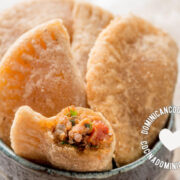
[Recipe + Video] Empanaditas de Yuca (Cassava Empanadas)
Empanaditas de Yuca (Cassava Empanadas): a delicious, gluten-free empanadas made with cassava flour, and that has a surprising crunchiness.
Servings 4 servings
Calories 388kcal
Ingredients
For the beef filling
- 1 tablespoon olive oil [10g]
- 1 red onion (small-sized, minced [40 g])
- 2 cloves garlic crushed [15g]
- ½ pound minced beef [113g]
- ½ cup tomato sauce [60g]
- ½ bell pepper (diced [76g] )
- ¾ teaspoon salt (or more, to taste)
- ½ teaspoon pepper (freshly-cracked, or ground) (or more, to taste)
- 1 sprig cilantro (optional)
For the dough
- 1 cup water
- 1 cup cativia (cassava flour or tapioca)
- ½ teaspoon salt
- 2 cups vegetable oil (corn, peanut or soy), divided
For the cheese filling
- ½ cup diced cheddar
Instructions
For the filling
- Make filling: Find instructions and video for filling here. We're using plain beef filling without the optional ingredients. Notice that for this recipe we're halving the ingredients. Set aside.
To make the dough
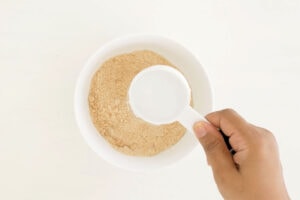
- Make dough: Heat water to boiling point. Leave simmering over low heat.Mix cativía, salt, and ½ tablespoon of oil. Pour ¼ cup of boiling-hot water and mix with a spatula. If the dough looks too dry, add more boiling water by the tablespoon, mixing each time until you have a coherent dough, but slightly on the dry side. Make sure not to add too much water.
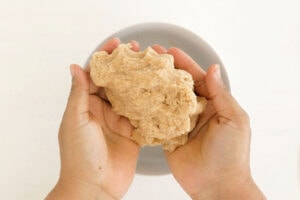
- Knead dough: Knead the dough until it is elastic but neither too sticky, nor too crumbly. It should resemble regular flour dough. If at any point it is too dry, or not elastic enough, add very small quantities of water and knead (see notes).
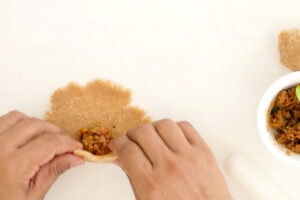
- Make empanadas: Divide the dough into 8 balls of equal size. On a lightly oiled surface roll out the balls forming thin disks. You may need to grease the rolling pin too if sticks too much.Put a tablespoon of the beef (or a few dices of cheese) in the center, double over in a semi-circle, and seal the border pressing it with a fork. Cut into a semicircle using a small bowl.
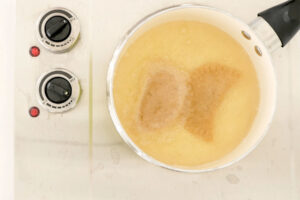
- Fry: Heat oil in a small pan (so you have at least 2 inches [5cm] of oil) over medium-high heat. Deep fry the empanadas submerged in very hot oil until they are golden brown. Don't overcrowd the pot so the temperature remains evenly hot. Place on a paper towel to absorb excess oil.
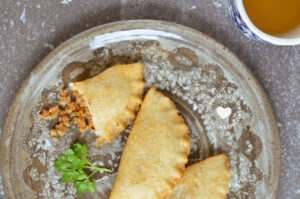
- Serve: Serve immediately after frying. You can store the empanadas prior to frying by placing them on greased wax paper and covering tightly with plastic film. I haven't tried freezing them, so I am not sure if they can be stored this way.
Video
Notes
Serving is two empanadas per person (8 in total), and approximate nutrition content is calculated with beef filling.
Using homemade or store-bought catibía means that you'll need different amounts of water. There is no way to tell the exact amount, as they have different levels of humidity.
Empanadas with store-bought catibía (fine tapioca)
I used about ½ cup of boiling-hot water, adding small amounts (by the droplets), as I advanced into the preparation and the dough got drier and harder to work on. I also tested Asian-style tapioca, which has a coarser texture, and bits the size of demerara sugar. This did not work very well, as it broke down easily, and didn't taste the same.Empanadas with homemade catibía
I used a little over ⅓ cup of water in total, following the same procedure. I found homemade cativía easier to work with, and the dough was more pliable, kept its shape better. The result was also much more attractive, and the taste was a lot better.How to make baked yuca flour empanadas
Yes, you can bake the empanadas. I did it by heating the oven to 400 ºF [200 ºC] and placing the empanadas on a silicone baking mat and baking until lightly golden. They were crunchy, had good texture, but were very pale (see video). You can also use these egg-free, gluten-free empanada wrappers and fill them with cheese, it's not as common as the traditional beef filling, but it's also a great choice. For non-traditional options, go with your favorite filling, as long as it's not too wet.Nutrition
Serving: 2g | Calories: 388kcal | Carbohydrates: 31g | Protein: 10g | Fat: 25g | Saturated Fat: 13g | Cholesterol: 40mg | Sodium: 926mg | Potassium: 325mg | Fiber: 1g | Sugar: 3g | Vitamin A: 600IU | Vitamin C: 23.2mg | Calcium: 20mg | Iron: 1.9mg