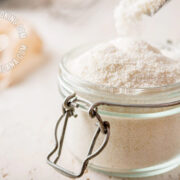
[Recipe + Video] Cativía (Cassava Flour, Tapioca flour)
Cativía , or Catibía (Cassava Flour, Tapioca), is one of the most ancient traditions of our cuisine, the basis for a number of traditional dishes, notably casabe, and cativía empanadas.
Servings 2 cups
Calories 424kcal
Ingredients
- 1.17 pound yuca (cassava) [530g], peeled and washed
Instructions
- Grate the cassava with the least coarse side of the grater.
- Using a clean cotton cloth, squeeze the cassava until you extract as much liquid as possible.
- Spread on a baking tray, breaking clumps, it should be slightly damp and the texture will be similar to grated parmesan.
- Refrigerate uncovered for 24 hrs or until it has dried completely (see notes). Sift and discard any large clumps.
Video
Notes
The refrigerator works as a handy substitute but if you have a real dehydrator this is a great time to use it. The traditional way of drying it is out in the sun, so you can try that option as well.
Store in a lidded jar. I've found one week to be the limit because on two occasions it grew some mold after five days, even in the fridge, proof that the flour wasn't 100% dry, but that was the best I could do with the resources at my disposal. You can try other methods if you feel like doing some extra testing on your own. A dehydrator and vacuum packing might solve the problem, but I don't have either of these gadgets.
Nutrition
Calories: 424kcal | Carbohydrates: 100g | Protein: 3g | Sodium: 37mg | Potassium: 719mg | Fiber: 4g | Sugar: 4g | Vitamin A: 35IU | Vitamin C: 54.7mg | Calcium: 42mg | Iron: 0.7mg